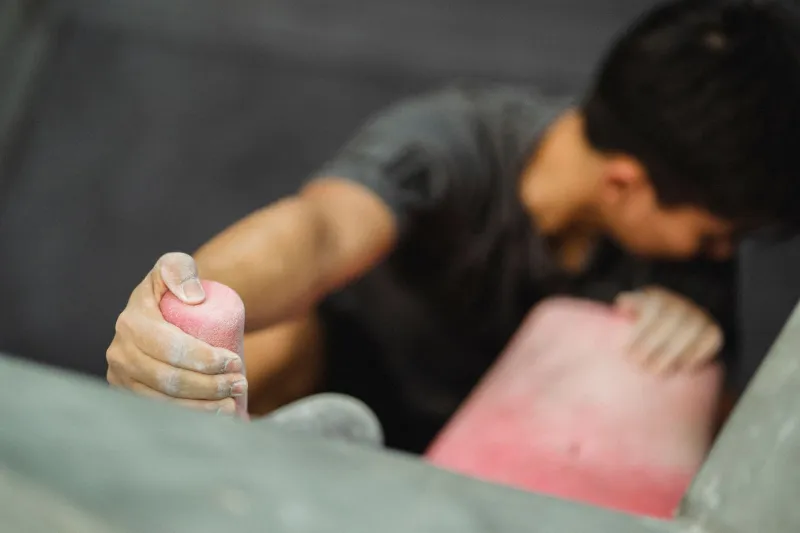
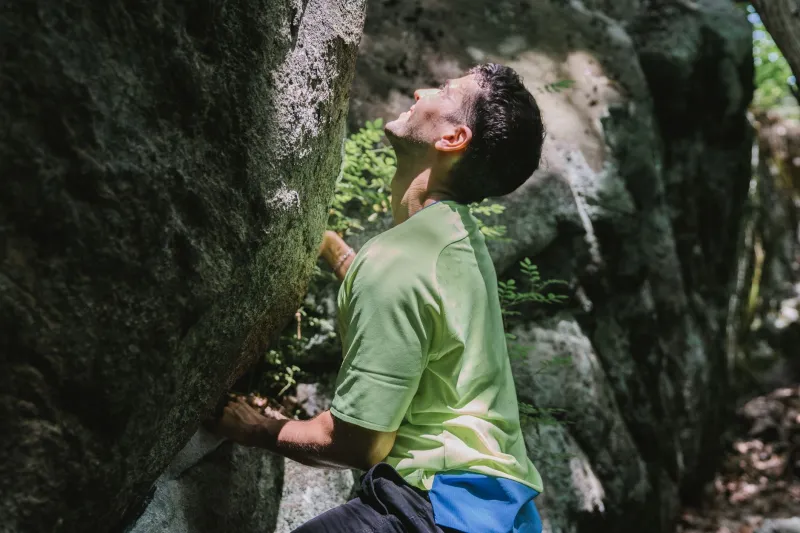
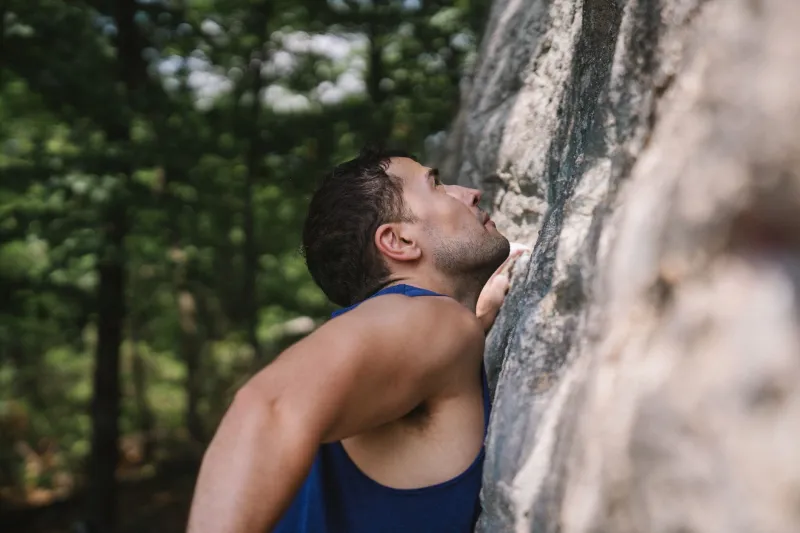
Stop Squeezing So Hard: What Your Grip Strength Obsession Is Costing You on the Wall
The Number on the Scale Isn't the Whole Story
Walk into any climbing gym on a Tuesday night and you'll find at least one person hanging off a fingerboard between burns, timing their hangs, logging their max added weight, comparing numbers with whoever will listen. Grip strength has become the currency of climbing fitness culture — the thing we measure, optimize, and obsess over.
And honestly? It makes sense. Grip strength is quantifiable. You can slap a number on it. It feels like progress in a sport that's notoriously hard to track.
But here's the uncomfortable truth: for most climbers working in the 5.10 to 5.12 range — and even beyond — raw crushing power is rarely the actual limiting factor. The wall doesn't care how much you can one-arm deadhang on a 20mm edge if you're barn-dooring off a sidepull, exhausting your forearms in the first ten moves, or panicking your way through a crux sequence.
More squeeze doesn't automatically mean more sends. And the sooner you internalize that, the faster you'll actually improve.
What Grip Endurance Actually Means (And Why It's Different)
There's a meaningful difference between grip strength and grip endurance, and most climbers conflate the two.
Grip strength is your peak output — how hard you can squeeze for a brief moment. Grip endurance is your ability to sustain a moderate level of force over time without the wheels falling off. For outdoor climbing, especially on longer routes or sustained boulder problems, endurance wins almost every time.
Think about a 60-foot sport route in Red River Gorge or a 35-move boulder in Hueco. You're not maxing out your fingers on every single hold. You're managing fatigue, choosing when to engage, when to rest your grip, and how to distribute effort across your whole body. A climber with good endurance and moderate peak strength will consistently outlast a crusher with poor stamina.
The training fix here isn't more max hangs — it's adding density training, ARC sessions, or repeater protocols that build your aerobic finger capacity. Less glamorous, definitely. More effective, absolutely.
Finger Positioning Is a Skill, Not a Measurement
Here's something that rarely comes up in the grip-strength conversation: the way you place your fingers on a hold matters as much as how hard you can pull on it.
Crimp position, open-hand, half-crimp, three-finger drag — each one loads your tendons and joints differently, recruits different muscles, and suits different hold shapes. A lot of climbers default to full crimp because it feels stronger in the moment. But that position puts significant stress on the A2 pulley, and over time, it can create a strength imbalance that actually makes you weaker on slopers and pinches.
Spend a few sessions consciously climbing in open-hand on routes that feel comfortable. It'll feel awkward at first. Your forearms will pump faster. That's normal — it means you're building capacity in a position you've been neglecting. The payoff is more versatile finger strength, reduced injury risk, and better adaptability on real rock where holds are rarely the size or angle you'd choose.
Efficient Pulling Mechanics: The Multiplier Nobody Talks About
Your fingers are the last link in a chain that runs through your shoulders, lats, core, and hips. If any part of that chain is leaking energy, you're asking your fingers to compensate — and that's where the false grip-strength narrative comes from.
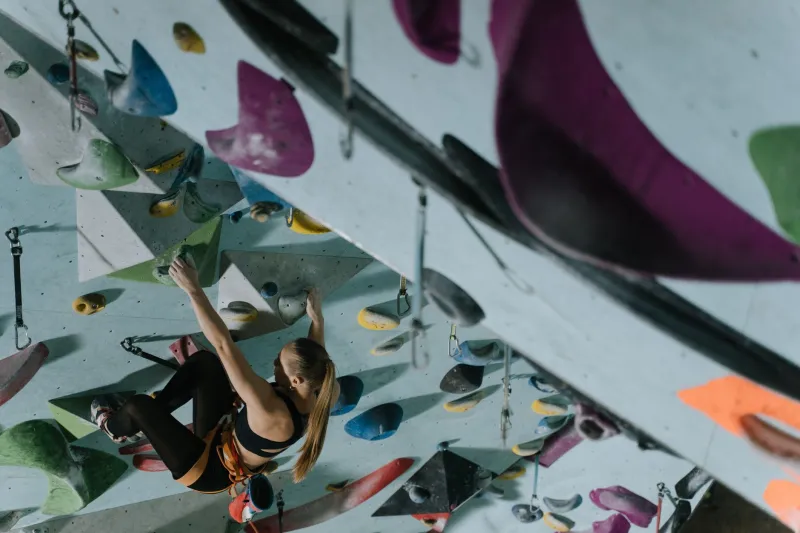
Climbers who struggle to keep their hips close to the wall, who flare their elbows out on steep terrain, or who hang straight-armed instead of engaging their shoulders are burning through their forearms twice as fast as they need to. They walk away thinking, "I just need stronger fingers." What they actually need is better body positioning.
Next time you're on an easy warm-up route, pay attention to how your body is oriented relative to the wall. Are you pulling with your arms before your feet are set? Are you letting your hips sag away from the rock on overhangs? Small corrections here translate into massive savings on your forearms — without changing your grip strength by a single pound.
A Simple Self-Test to Find Your Real Limiter
Before you add another hangboard session to your week, try this honest assessment:
Test 1 — The Pump Test: Get on a route that's two grades below your redpoint level. Climb it four times in a row with only two minutes of rest between each lap. If you're pumped by lap three, your endurance is the issue, not your max strength.
Test 2 — The Technique Audit: Video yourself on a project. Watch it back with the sound off and focus only on your hips and feet. If your hips are consistently far from the wall or your footwork is sloppy, you're wasting energy that's showing up as grip failure at the crux.
Test 3 — The Position Swap: Climb a moderate route in full open-hand only. If it feels dramatically harder than it should, you have a finger position imbalance worth addressing.
If you fail all three, then we can talk about whether you need more raw strength.
Train Smarter, Not Just Harder
None of this is an argument against building strong fingers. Finger strength matters. But it's one variable in a complex system, and it's probably not the variable that's actually stopping you from climbing the routes you want to climb.
The mental side of this matters too — and that's very much in Hazel's wheelhouse. There's a comfort in chasing metrics. Hangboard numbers go up, you feel like you're making progress, and it's a way of sidestepping the messier, harder-to-quantify work of improving your movement, your mental game, and your tactical decision-making on the wall.
Real climbing improvement is uncomfortable precisely because it requires you to confront the parts of your game that don't fit neatly on a spreadsheet.
So the next time you're tempted to add more weight to your hangboard, ask yourself honestly: is grip strength actually the crux? Or is that just the easiest thing to measure?