When the Board Lies to You: How Fingerboard Obsession Quietly Wrecks Your Outdoor Game
The Garage Gym Illusion
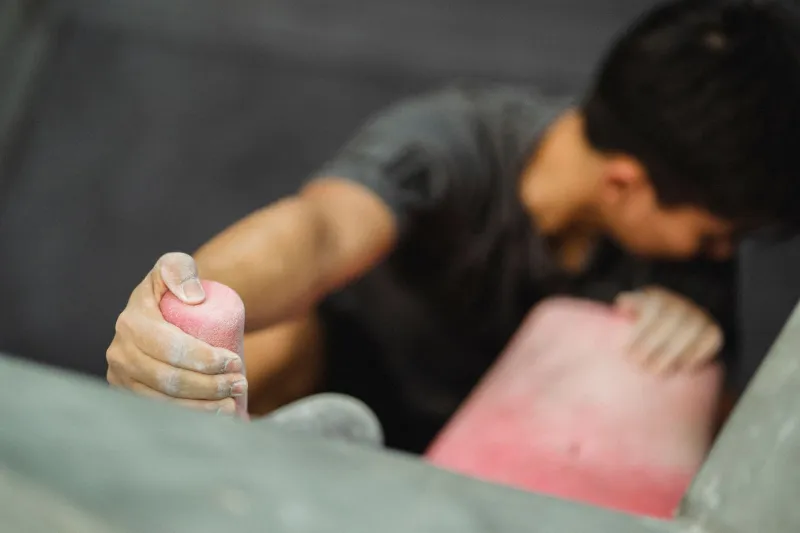
There's something deeply satisfying about a hangboard session. The holds are the same every time. The angle never shifts. You know exactly how many seconds you're hanging, exactly how much rest you're getting, and exactly where your fingers are going to land. It feels like progress — because in a narrow sense, it is progress.
But here's the thing nobody in your climbing group chat wants to say out loud: if the fingerboard is your primary training tool, you might be getting stronger in a way that doesn't actually translate to the rock. And that gap — between measurable gym gains and real-world performance — is something a lot of climbers in the US are quietly dealing with right now.
This isn't an anti-hangboard manifesto. Fingerboard training has legitimate, research-backed value. The problem is context. Or more precisely, the absence of context.
What Your Fingers Learn vs. What Climbing Actually Demands
When you hang on a fingerboard, your nervous system is doing something very specific: it's learning to recruit finger flexors under static, predictable load. You're building raw tensile strength in a controlled environment. That's useful. But outdoor climbing doesn't hand you static, predictable loads.
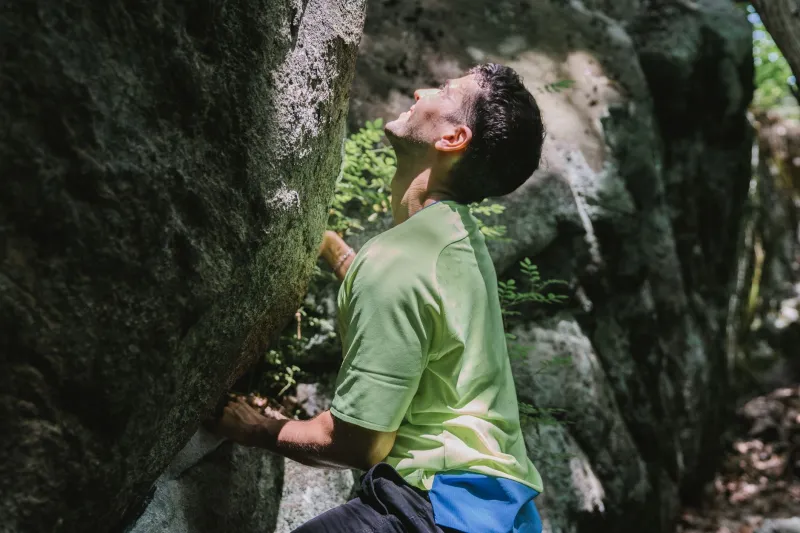
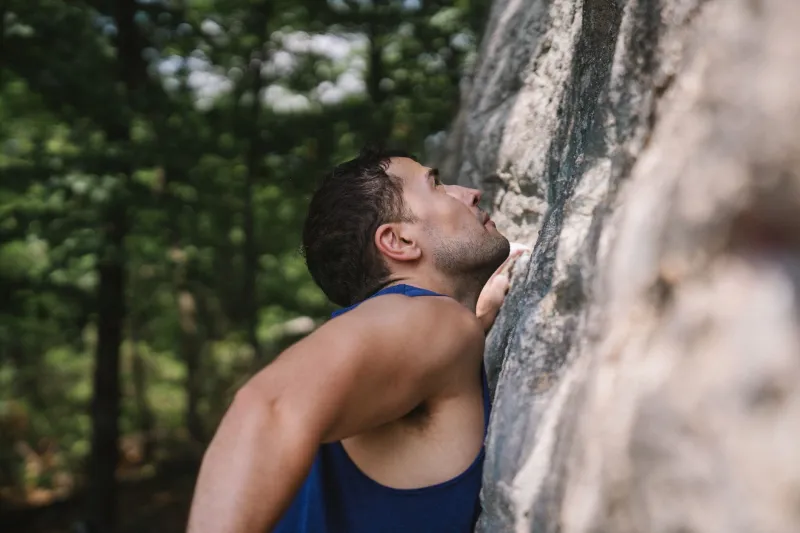
On real rock — whether you're projecting a limestone sport route in Red River Gorge or working granite cracks in Yosemite — your fingers are constantly adapting to micro-variations in hold texture, angle, and depth. Your body is making hundreds of tiny adjustments every second, integrating input from your fingertips, wrists, shoulders, hips, and feet simultaneously. The neuromuscular pattern you're running outdoors is dramatically more complex than the one you've been drilling in your garage.
When climbers spend months hammering the hangboard and then head outside, they often notice something frustrating: their fingers feel strong, but they feel clumsy. Holds that look like jugs feel insecure. Crimps that should be within their grade range feel sketchy and unfamiliar. This isn't imaginary — it's a real neurological mismatch. The movement vocabulary they've been reinforcing indoors doesn't map cleanly onto the chaotic, organic demands of outdoor terrain.
The Psychological Cost of Controlled Environments
There's also a mental dimension here that doesn't get enough airtime, and it's one that sits squarely in the territory of mental training.
Fingerboard training is, by design, a low-stakes environment. Nothing unexpected happens. There's no wind, no sun shifting across the wall and changing how a hold looks, no pump building while you hesitate at a crux, no consequence for letting go. Over time, training exclusively in that kind of controlled setting can subtly recalibrate your nervous system's baseline for what "normal" feels like when you climb.
When you hit the crag and something unexpected happens — a foothold is slicker than expected, a hold breaks, you get pumped earlier than planned — your system doesn't have a well-practiced response. The uncertainty feels disproportionately threatening. And that threat response, even a mild one, bleeds directly into your movement quality. You grip harder than you need to. You hesitate. You rush through sequences you should slow down for.
This is one of the sneakier ways that over-reliance on controlled training undermines outdoor performance: it starves your psychological adaptability. The mental resilience that outdoor climbing demands — the ability to stay process-focused when things go sideways — only develops through repeated exposure to unpredictable environments.
What "Outdoor Adaptability" Actually Looks Like
Adaptability isn't a soft skill. It's trainable, and it has a biomechanical basis. When you climb on varied terrain regularly — different rock types, different hold shapes, different angles — you're building what sports scientists sometimes call motor variability. Your nervous system accumulates a wider library of movement solutions, so when you encounter something novel, you have more options to draw from.
Fingerboard training, by contrast, builds motor consistency — the ability to reproduce a specific pattern reliably. Both are valuable. But if you're only building one at the expense of the other, you're creating an imbalanced athlete.
The climbers who perform best outdoors tend to have broad movement experience layered underneath their strength training. They've climbed on sandstone and granite and basalt. They've done slab and steep and crack. They've fallen in varied situations and learned what their body does under real stress. Their hangboard work sits on top of that foundation — it sharpens a tool that already knows how to cut.
A Smarter Integration Framework
So how do you keep the gains from fingerboard work without letting it hollow out your outdoor performance? A few principles worth building around:
Anchor your training weeks in outdoor or varied movement. If you're doing two hangboard sessions a week, make sure you're also getting at least two sessions of climbing that involves genuine unpredictability — outdoor days, bouldering on varied problems, or even climbing with your non-dominant hand leading sequences. The specificity of board work needs to be balanced by breadth.
Use the board to address specific weaknesses, not as a general fitness tool. Fingerboard training is most valuable when it's targeted — working a specific grip position that's limiting your project, for example. When it becomes your default training mode because it's convenient and measurable, it starts crowding out the messier, harder-to-quantify work that actually builds outdoor competence.
Deliberately practice uncertainty. This sounds abstract, but it's concrete in practice. Go climb routes you haven't read beta for. Climb at crags you've never visited. Do bouldering sessions where you're not allowed to look at the problem before your first attempt. Train your nervous system to function well when it doesn't have a script.
Notice the psychological patterns your training is reinforcing. If you find that you feel most confident in highly controlled environments and most anxious when things don't go to plan outdoors, that's a signal worth paying attention to. Your training environment shapes your mental patterns just as surely as it shapes your physical ones.
The Real Measure of Strength
There's a version of climbing fitness that looks great on paper — impressive hang times, solid max-hangs at bodyweight plus significant weight — but falls apart the moment the environment stops cooperating. And there's another version that might not be as flashy in the garage but shows up consistently when it matters: on a route you've never touched, in conditions you didn't plan for, at the end of a long day when your reserves are low.
The fingerboard is a legitimate tool. Used well, it can be the difference between sending your project and coming home empty-handed. But used as a substitute for the real thing — for the unpredictable, humbling, endlessly varied experience of climbing actual rock — it becomes a ceiling instead of a ladder.
Climb smarter. That means knowing which tool is right for the job, and having the discipline not to over-rely on the ones that feel the most controlled.