The Slow Burn: How Cumulative Climbing Damage Sneaks Up Before You Even Notice
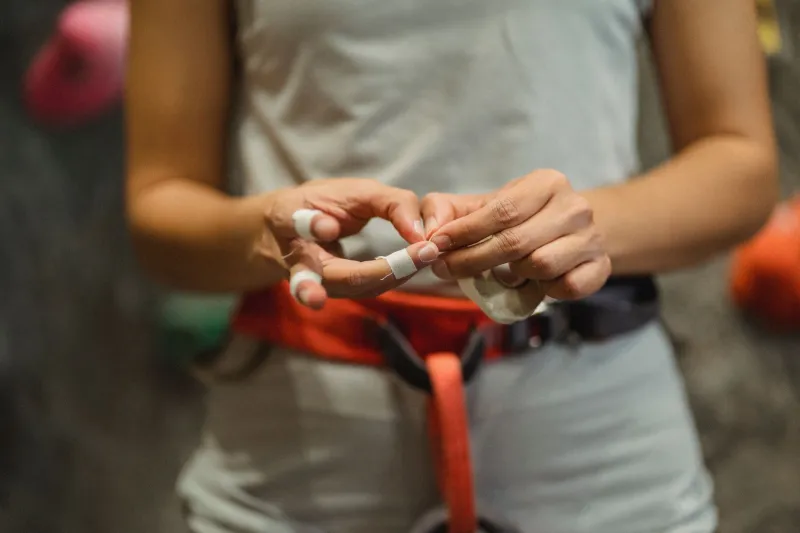
There's a particular kind of climber who never gets injured dramatically. No single fall, no obvious moment of overexertion—just a slow, creeping awareness that something isn't quite right. One week it's a little stiffness in the morning. The next it's a twinge in the A2 pulley that you decide to "climb through." And then, somewhere around week six, you're sitting on your couch with a bag of frozen peas on your hand wondering what went wrong.
What went wrong was volume. And the cruel joke is that it probably happened during what felt like your most disciplined training block ever.
Why "Smart" Training Can Still Hurt You
There's a lot of talk in the climbing community about training smart—periodization, structured rest days, progressive overload. All of that stuff matters. But there's a gap in the conversation that catches a lot of climbers off guard: the difference between intensity and volume, and what happens when you get them confused.
Intensity refers to how hard you're climbing. Volume is how much. You can have a low-intensity week that absolutely wrecks your tendons if you're logging six sessions on a hangboard and doing laps on moderate routes every single day. Connective tissue—tendons, pulleys, the labrum in your shoulder—doesn't recover the way muscle does. It doesn't respond to the same signals. And it accumulates stress silently, without the soreness cues that tell you your biceps have had enough.
The result? Climbers who feel physically fine—no acute fatigue, no muscle soreness—keep stacking sessions because their body isn't screaming at them to stop. And then the pulley strains. Or the shoulder impingement sets in. Or the elbow tendonitis that takes eight months to resolve.
The Warning Signs Most Climbers Dismiss
The body usually gives you a window before something becomes a real injury. The problem is that the warning signs are easy to rationalize away, especially when you're motivated and making progress.
Watch out for these:
- Morning stiffness that takes more than 15 minutes to clear — particularly in the fingers or forearms. A little stiffness is normal. Persistent stiffness that requires active warm-up to resolve is your connective tissue waving a flag.
- Tenderness when you press on a specific spot — the A2 pulley sits at the base of your ring or middle finger. If pressing on it with your thumb produces a dull ache, that's inflammation, not soreness.
- Pain that improves once you're warmed up but returns afterward — this one fools climbers constantly. You feel fine mid-session, so you assume you're good. But the post-session ache that lingers into the next morning is the actual signal.
- Asymmetrical fatigue — if one shoulder or one forearm is consistently more beat up than the other, your movement patterns may be compensating for something that's already compromised.
None of these are emergencies on their own. But all of them, ignored over weeks, become the injury you didn't see coming.
The Volume Trap: When Consistency Becomes the Problem
Here's the counterintuitive part. The climbers most likely to fall into this trap are often the most consistent ones. They show up. They put in the work. They're not doing anything reckless—no campus board max efforts, no projecting routes three grades above their level on day one. They're just... climbing a lot. And then a little more. And then squeezing in an extra session because they're finally making progress.
This is the volume trap. Consistency is genuinely a superpower in climbing—but only when your recovery capacity can match your output. And recovery capacity isn't fixed. It depends on sleep quality, nutrition, life stress, age, and a dozen other variables that fluctuate week to week.
A useful mental model: think of your connective tissue as a bank account. Every session makes a withdrawal. Rest, sleep, and nutrition make deposits. If you're withdrawing more than you're depositing—even gradually—the account eventually hits zero. And unlike muscle fatigue, which gives you overdraft warnings, tendons just close the account without much notice.
A Framework for Knowing When to Back Off
The goal isn't to climb less forever. It's to develop enough self-awareness to catch the inflection point before your body catches it for you. Here's a simple framework that works for most climbers:
The 1-to-10 pain rule. Before each session, rate any discomfort in your fingers, elbows, or shoulders on a scale of 1 to 10. A 1 or 2 (mild awareness, no functional limitation) is probably fine to train through at reduced intensity. A 3 or above means you modify or rest. A 5 or above means you stop and assess seriously.
The two-week check-in. Every two weeks, ask yourself: is my discomfort trending up, down, or staying flat? Flat or improving means you're managing it. Trending up—even slowly—means your volume is outpacing your recovery.
The mandatory deload. Every four to six weeks, take a week where you cut your climbing volume by at least 40 percent. Not because you feel like you need it, but because connective tissue repair happens in the low-stress windows, not the high-output ones. Most climbers skip deload weeks when they're feeling good. That's exactly backward.
When You're Already There: Practical Recovery Protocols
If you're reading this and recognizing symptoms you've been ignoring, the first step is acceptance: you're dealing with an overuse issue, and pushing through it will not make it go away faster. It will make it worse.
For early-stage pulley strains and tendonitis, the most evidence-supported approach right now combines active rest (reducing load, not eliminating movement), eccentric loading once acute inflammation settles, and—critically—patience. Most climbers underestimate recovery timelines by about half. A two-week rest that doesn't fully resolve the issue isn't a failed recovery; it's a sign the timeline is longer than you hoped.
If you can access a sports physical therapist who works with climbers or has experience with upper-extremity injuries, do it. The cost of a few sessions is nothing compared to a six-month layoff.
The Takeaway
Climbing harder is the goal. But climbing harder sustainably is the actual game. Volume has a ceiling, and that ceiling is different for everyone—and it changes based on everything else happening in your life. The climbers who stay healthy longest aren't the ones who train the hardest. They're the ones who've learned to read their own signals before the signals become emergencies.
Your tendons are telling you something right now. The question is whether you're listening.