Clout Climbing: When the Feed Becomes the Goal and Real Progress Disappears

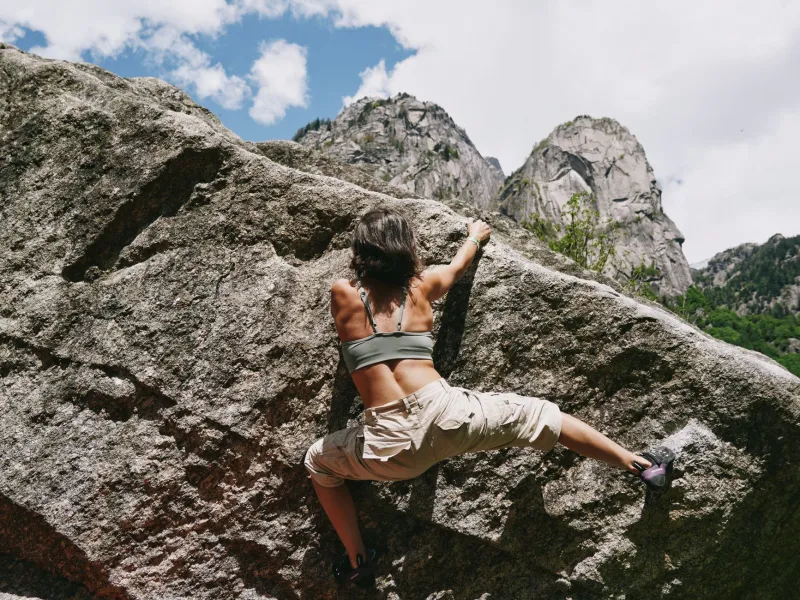
Photo by Photo by Ryan Franco on Unsplash on Unsplash
Let me paint you a picture that probably feels familiar.
You're at the crag. Someone in your group is working a project—really working it, deep in the process, figuring out the movement, failing productively, learning something real. And then someone else pulls out their phone. Suddenly the energy shifts. The person on the route starts climbing differently. More dramatically. They start calling their falls. They start talking to the camera. The send attempt that was about them and the route is now about something else entirely.
Maybe you've been that person. I know I've caught myself doing it.
Social media hasn't just changed how we share climbing. It's changed what we value about it—and that shift is worth looking at honestly, even if the conclusion is uncomfortable.
The Metric Swap
For most of climbing's history, the metrics were simple: did you send the route? Was it clean? What grade? Those numbers were imperfect measures of skill, sure, but they were at least pointing at something real—your actual capability on actual rock.
Social media introduced a parallel set of metrics that have nothing to do with climbing ability: likes, views, follower counts, shares, saves. These numbers measure something genuinely different—how visually compelling your climbing is, how relatable your content is, how well-timed your post was. They measure audience response, not performance.
The problem isn't that those metrics exist. The problem is that for a growing number of climbers, they've quietly replaced the original ones. Grade chasing has been partially replaced by content chasing. The question isn't just "can I climb this?" It's "will this look good if I post it?"
And those two questions lead you to very different places.
What Gets Optimized for the Camera
Content-friendly climbing and skill-building climbing don't always overlap—and when they diverge, the results are telling.
Sends look better than working a route. So climbers rush the process, attempting things before they're ready, because the camera is rolling and the moment needs to happen. Dramatic falls look better than controlled, thoughtful movement. So climbers stop thinking about body positioning and start thinking about how they look mid-fall. Flashy grades look better than appropriate grades. So climbers jump to 5.13 content when they'd genuinely learn more from spending a month really owning 5.11.
Hard sport routes look better than trad climbing on ugly rock. Big gyms look better than sketchy local crags. Powerful bouldering looks better than technical slab work. Over time, the medium shapes the message—and climbers who are optimizing for content without realizing it start gravitating toward whatever photographs well, whether or not it's what they actually need.
This is how you end up with climbers who look incredible on Instagram and can't read a new route to save their lives.
The Community Fracture
There's also a social dimension to this that's fragmenting climbing communities in ways that don't always show up in obvious ways.
Climbing has historically had a strong culture of mentorship, of sharing beta freely, of celebrating other people's sends as genuinely as your own. That culture is still alive—but it's under pressure. When follower counts become status markers, the incentives shift. You start thinking about who gets credit for a discovery. You think twice before sharing a secret spot. You notice that some climbers are more willing to help beginners when a camera is present than when it's not.
None of this is unique to climbing, of course. Every community that intersects with social media goes through some version of this. But climbing has a particular vulnerability to it, because the sport is so visually spectacular and so easily packaged into compelling content. The temptation is enormous.
And the result is a quiet split in the community between climbers who are in it for the growth—who will spend three sessions working a move nobody will ever see them make, because the move matters to them—and climbers who are increasingly performing climbing for an audience rather than experiencing it for themselves.
Reclaiming Your Own Standards
I want to be careful here, because this isn't a screed against posting climbing content. Sharing your sends is fun. Inspiring other people is genuinely good. Some of the most valuable climbing education happening right now is on YouTube and Instagram, and that matters.
The issue isn't social media. The issue is unconscious optimization—letting the logic of the platform shape your values without noticing it's happening.
So how do you push back?
Climb without your phone more often. Not forever, not as a moral statement—just regularly enough that you remember what it feels like to be in a session where no one is watching and nothing is being documented. Notice how your priorities shift. Notice what you're willing to work on when there's no audience.
Set private goals. Decide on something you want to achieve that you have no intention of posting about. Work toward it. See how it feels to succeed at something that exists only for you.
Be honest about your motivations when you choose what to climb. Ask yourself: am I going to this crag because it's what I need right now, or because it photographs well? Neither answer is wrong, but knowing which one is true helps you make intentional choices.
Celebrate process publicly, not just sends. If you're going to post, post the failure. Post the working session. Post the moment you figured something out. Normalize the messy, unglamorous parts of climbing development, because that's where the actual growth lives—and the more climbers see that content, the healthier the community's collective values become.
What Climbing Is Actually For
Here's the thing that social media, at its worst, obscures: climbing is fundamentally a private conversation between you and the rock. The grade is just a rough translation. The send is just a milestone. The real thing—the thing that keeps people doing this for decades, that makes climbers drive six hours to a crag and sleep in their cars and come back empty-handed and come back again—is something that happens in your body and your nervous system and your relationship with difficulty and fear and your own limits.
That experience doesn't compress into a thirty-second reel. It doesn't fit in a caption. And the climbers who stay connected to it, who keep that experience at the center of why they climb, are the ones who keep progressing—not because they're anti-social media, but because they never let the feed become the point.
Your climbing is yours. Keep it that way.