Stuck in the Same Grade? Here's What's Actually Going On
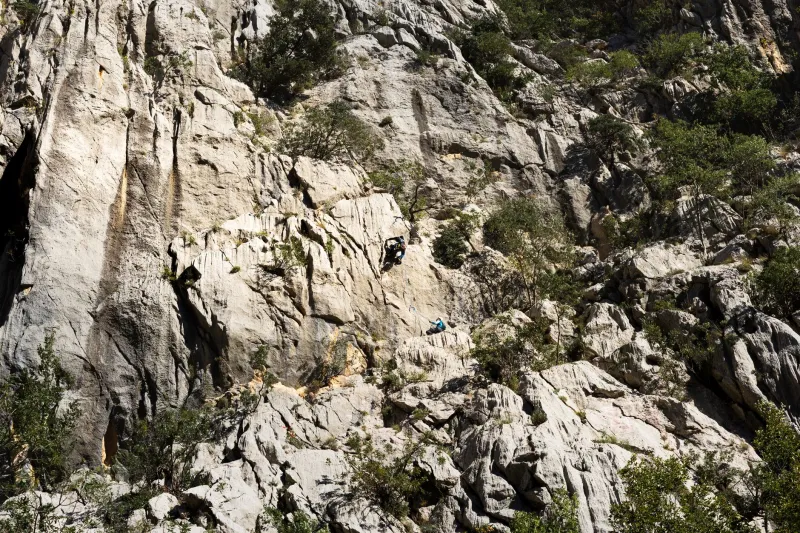
Three seasons. Same grade. Different crag, different gym, same number on the wall.
If that sounds familiar, you're probably oscillating between two explanations: either you're not training hard enough, or you're just not cut out for the next level. Both of those are almost certainly wrong. What's more likely is that you're caught in the normal, messy, nonlinear reality of climbing progress—and you're interpreting it as failure because it doesn't look like the highlight reel you've been watching online.
Let's actually dig into what's happening.
Seasons Change You More Than You Think
Climbing is one of the few sports where the environment itself is a training variable. Summer heat in the Southeast makes crimps feel greasy and footwork sloppy. Winter sends you indoors, where plastic holds reward a different kind of strength and movement pattern. Spring sends you back outside feeling gym-strong but crag-rusty.
Each of those transitions costs you something—usually a few weeks of recalibration where your actual ability doesn't match what the grade on the wall says you should be doing. When you layer three or four of those transitions across a year, a significant chunk of your climbing time gets spent just catching up to yourself.
This isn't a plateau. It's friction. And there's a difference.
A plateau means your ceiling isn't moving. Friction means you're spending energy on recalibration instead of progression. One requires a training intervention. The other just requires patience and some deliberate bridging work between environments.
Life Stress Is a Hidden Training Load
Here's something most training articles skip over: your nervous system doesn't know the difference between a hard redpoint attempt and a brutal week at work. Both cost recovery resources. Both eat into the budget your body uses to adapt and improve.
If you've been grinding at the same grade through a stretch that included a job change, a move, a difficult relationship, or even just a sustained period of poor sleep—that's not a coincidence. Chronic life stress suppresses the physiological processes that drive climbing improvement. Your tendons don't recover as fast. Your motor learning slows down. Your mental game gets fragile.
The climbers who push through that window and still see progress aren't superhuman. They're usually just doing less than they look like they're doing, or they've built enough of a base that they're coasting on existing fitness. Neither of those is a model worth copying blindly.
If life is loud right now, the honest move is to treat your climbing as maintenance, not development. Hold what you have. Come back to building when the noise settles.
The Difference Between Rest and Hiding
There's a version of the plateau that is genuinely productive—where your body and brain are consolidating gains, and backing off is exactly the right call. And then there's the version where you've just gotten comfortable at a certain level and stopped doing the things that are actually uncomfortable.
Those two states can look identical from the outside. They even feel similar in the moment. The distinguishing question is this: when did you last do something on the wall that scared you a little?
Not reckless. Not dangerous. But genuinely outside your comfort zone—a move you weren't sure you could stick, a route where falling felt like a real possibility, a session where you tried and failed instead of cruising laps on familiar terrain.
If it's been a while, you're probably not resting. You're hiding. And the plateau you're experiencing isn't seasonal or stress-related—it's structural. You've optimized for feeling competent instead of becoming more capable.
A Simple Framework for Figuring Out Which One You're In
Before you add more campus board sessions or hire a coach, run through this honestly:
1. Is your effort level consistent? Are you showing up regularly, or has your climbing become sporadic? Inconsistency masquerading as plateau is extremely common, especially among climbers with busy lives.
2. Are you attempting things that feel hard? Not just things that are labeled hard, but things that genuinely challenge your current movement vocabulary. If every session feels manageable, you're not at your edge.
3. What does your off-wall life look like? Sleep, nutrition, stress, alcohol, screen time—these aren't wellness clichés. They're training variables. If they're a mess, your grade is going to reflect that.
4. How long has this actually been going on? Six weeks isn't a plateau. Six months might be. A year probably is. Time matters here.
When It Actually Is Time to Intervene
If you've honestly assessed the above and you're consistently showing up, consistently trying hard things, and life is reasonably stable—and you've still been sitting at the same grade for over six months—then yes, something in your approach needs to change.
Usually it's one of three things: volume is too low to drive adaptation, the training stimulus is too repetitive to create new strength, or there's a specific technical weakness that's capping your grade ceiling. A good coach can identify which one in a single session. So can a training partner who's willing to be honest with you.
But before you get there, do the honest audit. Most plateaus are not mysteries. They're just patterns we haven't looked at clearly yet.
Progress in climbing isn't a straight line. It's a staircase with long flat sections between the steps. The flat sections aren't failure—they're just the part nobody posts about.